Signs of Hidden Water Damage Behind Walls and Ceilings
Musty smells, bubbling paint, and unexplained spikes in your water bill are the top signs of hidden water damage behind walls and ceilings in Falls Church VA.
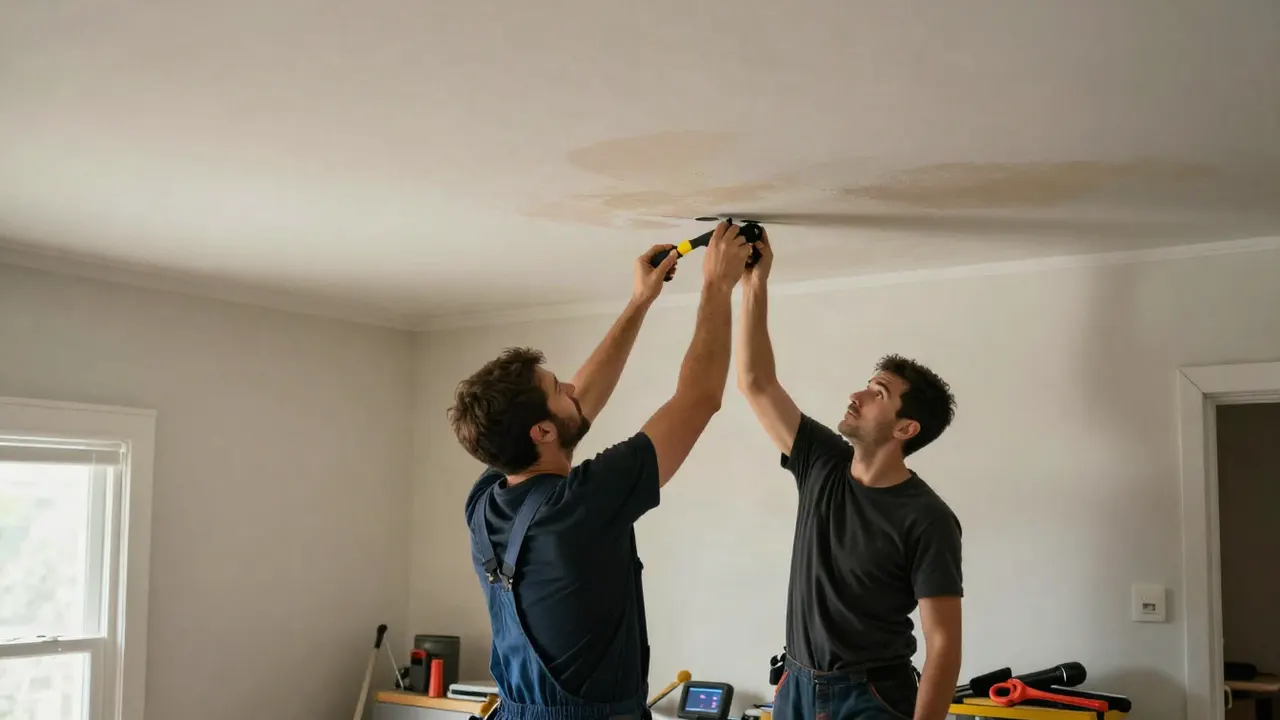
The clearest signs of hidden water damage behind walls and ceilings are a musty smell that won't go away, paint that bubbles or peels without a reason, soft or spongy drywall, and brown or yellow rings on the ceiling that grow after rain. If you notice any one of these in your Falls Church home, water is already inside the assembly - you just haven't found the entry point yet. This guide walks through the specific warning signs we look for on service calls, how to check each room yourself, and when it's time to bring in moisture detection equipment.
What Are the Signs of Hidden Water Damage Behind Walls in Falls Church VA?
Signs of hidden water damage Falls Church VA homeowners report most often fall into four categories: smell, texture, sight, and money.
Smell is usually first. A damp, earthy, or locker-room odor that lingers in one room - especially a bathroom, laundry room, or basement - almost always means moisture is trapped behind a surface where air can't reach it.
Texture comes next. Drywall that has absorbed water loses its rigidity. Press your palm against a wall near a tub, sink, or exterior corner. If it gives slightly, or the paint feels cool and clammy, water is sitting behind it.
Sight is the obvious one: discoloration. Yellow, tan, or brown rings on a ceiling, dark streaks along a baseboard, or paint that has started to bubble and flake are all visible evidence. The catch is that by the time you see a stain, the leak has usually been running for weeks.
Money is the quiet one. An unexplained jump in your water bill - even $20 to $40 a month - can point to a slow supply-line leak inside a wall. A running toilet adds about 200 gallons a day; a pinhole leak in a copper pipe can waste 10,000 gallons a year without ever showing a drop on the floor.
Hidden water damage behind walls Falls Church is a moisture problem that has spread into framing, insulation, or drywall without a visible source - and it needs to be found and dried, not just painted over.
Why Hidden Water Damage Is Common in Falls Church Homes
Falls Church has a housing mix that makes hidden leaks unusually likely. A large share of the city's detached homes were built between 1940 and 1970, which means galvanized steel supply lines and cast-iron drain stacks that are now 60 to 85 years old. Galvanized pipe corrodes from the inside out; it weeps at threaded joints long before it fails outright.
Add the region's weather. Northern Virginia averages around 43 inches of rain a year, and the summer thunderstorm pattern dumps a lot of that in short bursts. That water finds its way through aging roof flashing, chimney surrounds, and window headers - then travels sideways along framing before it ever drips into a room.
Basements and crawl spaces make it worse. The clay-heavy soils around Falls Church don't drain quickly, so hydrostatic pressure pushes groundwater against foundation walls. If your sump pump is undersized or the discharge line is clogged, water enters the crawl space and wicks upward into the floor system above.
We see this pattern constantly in the older blocks near Water Damage in Downtown Falls Church, where 1950s capes and colonials sit on tight lots with mature tree roots pressing into sewer laterals. Roots crack the pipe, sewage seeps into the soil under the slab, and the first sign inside the house is often a smell - not a puddle.
How to Detect Water Damage Behind Walls Falls Church: A Room-by-Room Check
You can do a solid preliminary inspection in about 30 minutes with a flashlight and your nose. Here's what we tell homeowners to check, in order.
Bathrooms and kitchens
- Look under every sink for staining on the cabinet floor and swelling at the toe kick.
- Check the caulk line where the tub or shower meets the wall - cracked or missing caulk lets water into the wall cavity with every shower.
- Open the cabinet next to the dishwasher and look for dark streaks on the side panel.
- Feel the wall behind the refrigerator if it has an ice maker or water dispenser line.
Ceilings and upper floors
- Scan ceilings with a flashlight held at a low angle - faint rings show up better in raking light.
- Check the ceiling directly below second-floor bathrooms and around any roof penetration (vents, chimneys, skylights).
- Look for paint that has a slightly different sheen in one patch; that's often the first visual clue before a stain forms.
Basements and crawl spaces
- Look for white chalky deposits (efflorescence) on foundation walls - that's minerals left behind by water that has already moved through.
- Check the bottom plate of any framed wall for dark, soft wood.
- Smell the air near the floor; musty odors concentrate low.
If you find active moisture or a stain that's still spreading, stop the source first. A burst supply line or failed washing machine hose needs Emergency Water Extraction Falls Church VA before anything else - every hour of standing water increases the chance of mold and warped flooring.
Ceiling Water Damage Signs Falls Church Virginia Homeowners Should Never Ignore
A water stain on a ceiling means water is currently above it or has been recently. The color tells you how old the problem is.
A light tan or pale yellow ring is usually a newer leak - days to a few weeks old. A dark brown or rust-colored ring has been running longer, and the brown tint often comes from rust in the pipe or from tannins in wood framing. A gray or black ring with a fuzzy edge is a mold problem, not just a stain.
Three ceiling signs mean call someone today:
- The ceiling is sagging or bulging. Water has pooled above the drywall and the board is losing its grip on the joists. It can collapse without warning.
- The stain grows after rain. That points to a roof or flashing leak, and it will keep feeding moisture into the attic and ceiling assembly every storm.
- You hear dripping inside the ceiling. Active water is moving right now.
Ceiling water damage signs Falls Church Virginia homeowners describe most often start as a small ring near a bathroom vent or chimney chase. By the time the ring is the size of a dinner plate, the insulation above is usually saturated and needs to come out. Wet insulation doesn't dry in place - it holds moisture against the framing and feeds mold. That's a job for Insulation Removal and Replacement Falls Church VA, not a shop vac.
The Musty Smell Test: When Odor Points to a Hidden Leak
A musty smell hidden water damage Falls Church residents notice is not a cleaning problem. It's microbial growth - mold and mildew colonizing wet drywall paper, insulation, or wood - and it produces that distinctive earthy odor as a byproduct.
Mold can start growing on wet drywall in 24 to 48 hours. It doesn't need standing water; it needs moisture above about 60% relative humidity and a food source, which drywall paper and dust provide. That's why a slow leak behind a wall can produce a smell long before it produces a stain.
Here's a simple test. Close the door and windows in the suspect room for an hour. Then step in and breathe through your nose near the floor and near the ceiling. If the odor is stronger in one zone, that's where the moisture is concentrated.
If the smell is confirmed, you're past the DIY stage. Mold Remediation Falls Church VA involves containing the area, removing porous materials that can't be cleaned, and treating the remaining surfaces - not spraying bleach on the visible spot. Bleach kills surface mold but does nothing about the colony inside the wall cavity or the moisture feeding it.
Common Mistakes Homeowners Make With Hidden Water Damage
The single most expensive mistake is painting over a water stain. It hides the evidence, traps moisture in the drywall, and by the time the stain bleeds through again, the damage has spread two or three stud bays in each direction.
Other mistakes we see regularly:
- Assuming a small stain means a small problem. Water travels along the path of least resistance - often sideways along a joist - so the visible stain is rarely directly under the leak.
- Running a household fan and calling it dried. Air movement alone doesn't pull moisture out of wall cavities or subfloor. You need dehumidification and, in most cases, directed air movement into the cavity.
- Ignoring a musty smell because there's no visible water. Smell is a reliable indicator. Trust it.
- Waiting for the next rain to "see if it happens again." Every rain cycle adds moisture and pushes the damage deeper.
- Not checking the water bill. A $30 monthly increase is a cheap diagnostic tool you already have.
One more: don't assume your insurance will cover a leak you knew about and didn't address. Most policies cover sudden and accidental discharge - a pipe that bursts - but exclude long-term seepage that a reasonable homeowner should have noticed. Documenting when you first saw the sign matters.
When to Call a Professional for Hidden Leak Detection in Falls Church
Call a professional when you have two or more of the signs above, when a stain is growing, or when you can't find the source after a basic walkthrough. Hidden leak detection Falls Church requires tools most homeowners don't own: thermal imaging cameras, pin-type and pinless moisture meters, and sometimes a borescope to look inside a wall cavity without cutting a large hole.
Thermal imaging works because evaporating water cools the surface above it. A trained technician can see temperature differences of a degree or two on a wall and trace the wet zone back to its source. Moisture meters then confirm the reading and tell us how far the moisture has spread.
At Water Damage Falls Church VA, we start every hidden-leak call with Moisture Mapping and Thermal Imaging Falls Church VA so we know exactly where the water is before we open anything. Then we dry the structure, repair the source, and rebuild what was removed. Upfront pricing, one point of contact, and we don't leave until the readings are back to dry standard.
If the leak is coming from a failed pipe joint, we handle the repair and the cleanup together. If it's a roof penetration, we coordinate the roof repair with the interior drying so you're not waiting on two contractors to talk to each other.
For homeowners in the neighborhoods off Route 7 and near the W&OD Trail, we also see a lot of crawl space moisture that never makes it to a living space. Water Damage in West Falls Church calls often start with a musty smell on the first floor and end with a wet crawl space that's been damp for a year. Catching it early saves the floor system.
Frequently Asked Questions
What are the signs of hidden water damage in Falls Church?
The most reliable signs are a persistent musty odor, paint that bubbles or peels, soft or spongy drywall, brown or yellow ceiling stains, and an unexplained rise in your water bill. Any one of these means moisture is present behind a surface. Two or more means the problem has likely been active for weeks.
How do I check for water damage behind walls in Falls Church VA?
Press along baseboards and around tubs and sinks for soft spots, look for staining or paint bubbling, and smell near the floor and ceiling in each room. A flashlight held at a low angle reveals faint rings. If you find moisture but no source, a thermal imaging inspection will locate it without tearing out drywall.
Can hidden water damage cause mold in Falls Church?
Yes. Mold can begin growing on wet drywall within 24 to 48 hours, and it needs only about 60% relative humidity - not standing water. Hidden leaks behind walls and above ceilings are one of the most common mold sources we find because the moisture stays trapped and never dries out on its own.
Who can detect hidden water leaks in Falls Church?
A water damage restoration company with thermal imaging and moisture metering equipment can locate hidden leaks without opening large sections of wall. Plumbers handle the pipe repair once the leak is found. We do both - detection, drying, and the repair - so you're not coordinating two separate visits.
Does insurance cover hidden water damage in Falls Church?
Most policies cover sudden and accidental discharge, like a burst pipe or failed supply line. Long-term seepage you should have noticed is typically excluded. Document when you first saw the sign, photograph everything, and call us before you file - our moisture report gives your adjuster the evidence they need.
Get Help With Water Damage in Falls Church
If you've spotted a stain, smelled something musty, or felt a soft spot in a wall, the water is already there - and it's spreading. We find the source, dry the structure, and repair the damage in one visit.
Call Water Damage Falls Church VA at 571-760-4393 and we'll schedule a moisture inspection at your home.