Emergency Water Extraction vs Standard Drying: What's the Difference?
Emergency water extraction removes standing water fast; standard drying removes the moisture left behind. Here's how to tell which one your Falls Church home needs.
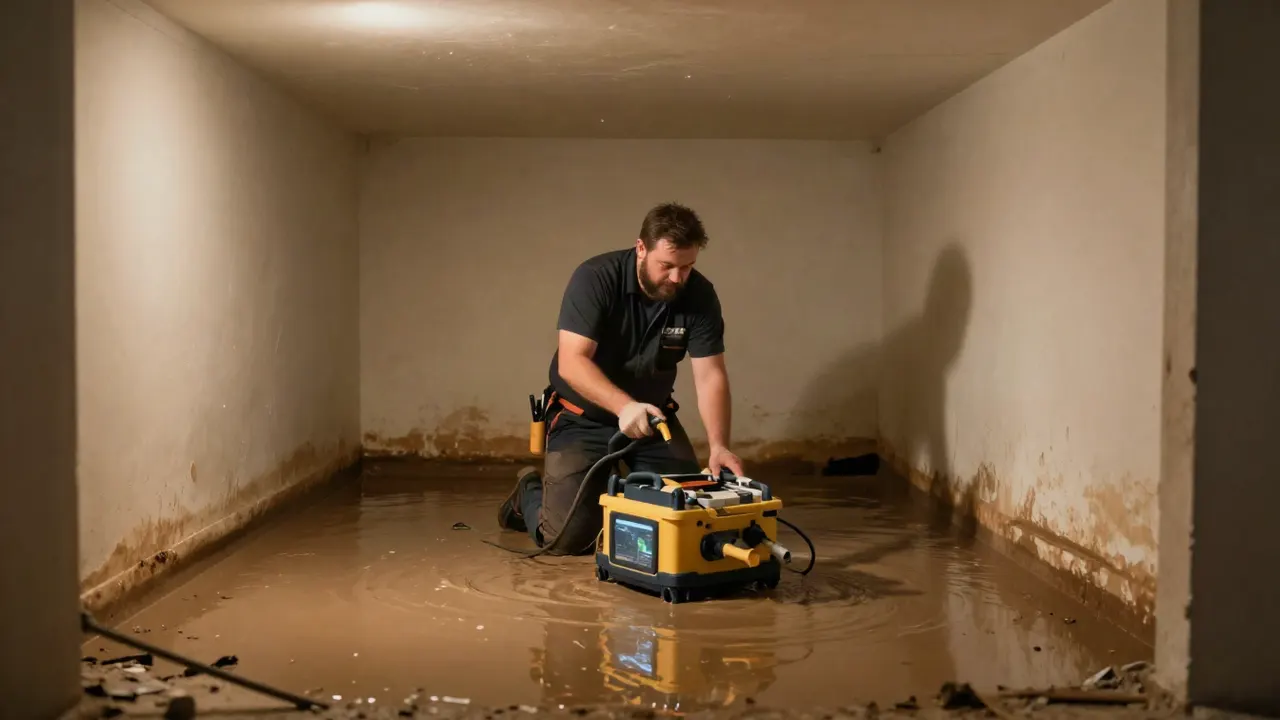
Emergency water extraction removes standing water from your floors, carpets, and crawl spaces with high-volume pumps and vacuums, while standard drying removes the moisture that stays trapped in materials like drywall, hardwood, and subfloor after the visible water is gone. You need extraction first when there is standing water or saturated carpet; you need standard drying afterward to bring structural materials back to a safe moisture level. The two are not competing services - they are two stages of the same job, and skipping either one is how a small leak becomes a mold problem.
We run both stages every week across Falls Church, from 1920s bungalows near Broadmont to newer townhomes off Route 7. This post breaks down what each stage actually does, when emergency extraction is the right call, how long drying takes in this climate, and what 2026 pricing looks like so you can make a fast decision when water is on the floor.
The Short Answer: Extraction Removes Water, Drying Removes Moisture
Emergency water extraction vs standard drying Falls Church VA comes down to one distinction: extraction is a physical removal step, and drying is an evaporation step. Extraction uses truck-mounted or portable units to pull liquid water out of a space at rates measured in gallons per minute. Drying uses air movers and dehumidifiers to evaporate the water that has soaked into materials and then remove that vapor from the air.
Think of it like a wet sponge. Extraction is wringing the sponge out. Drying is leaving it on a rack with a fan until every last bit of moisture is gone. If you only wring it out, it still feels damp an hour later. If you only put a fan on a soaked sponge, you will be waiting days.
That is why the two stages are always sequenced. We extract first, then we dry. Any company that shows up with only fans and no extraction equipment is going to leave water in your subfloor.
What Is Emergency Water Extraction?
Emergency water extraction Falls Church VA is a rapid-response service that removes standing water and heavily saturated materials within the first 24 to 48 hours of a water intrusion. It is the emergency phase of a water damage job, and it is what stops the damage from spreading into adjacent rooms, down into ceilings, and into wall cavities.
Here is what our technicians actually do during an extraction call:
- Shut off the water source if it is still running - a supply line, a failed sump pump, or an overflowing appliance.
- Use moisture meters and thermal imaging to map how far the water has traveled.
- Run truck-mounted extraction units on carpet and pad, which pull water out at 10 to 15 gallons per minute on a standard setup.
- Use weighted extraction tools on glued-down carpet and portable units in tight spaces like closets and under cabinets.
- Pull water from hardwood floors through the seams before boards start to cup.
- Extract standing water from crawl spaces and basements with submersible pumps when the depth exceeds what a vacuum can handle.
- Remove and bag saturated carpet pad, which almost never dries in place and will grow mold within 24 to 48 hours.
Extraction is loud, wet, and fast. A typical residential extraction for a burst supply line takes 2 to 4 hours on site. A finished basement with 2 inches of standing water can take 6 to 8 hours with multiple technicians.
What Is the Standard Drying Process?
The standard drying process Falls Church Virginia homes use after extraction is a controlled evaporation phase that runs for days, not hours. Once the standing water is gone, the structure is still wet - the framing, the drywall paper, the subfloor, the baseboards, and the air itself. Drying is how we get all of that back to a normal moisture content.
A standard drying setup usually includes:
- Commercial air movers positioned every 10 to 16 feet along walls to keep air moving across wet surfaces.
- LGR dehumidifiers that pull moisture out of the air so it does not just re-settle into the materials.
- Injectidry or floor mat systems for hardwood and hard-to-reach cavities.
- Daily moisture readings logged at the same points so we can prove the numbers are dropping.
We check moisture content against dry standard readings for the specific material. Drywall in a Falls Church home typically reads 0.4 to 0.8 percent on a pin meter when dry. Wet drywall reads 20 percent or higher. We do not pack up equipment until the readings are within 2 to 3 points of dry standard.
If you want the deep version of how we handle this stage, our Structural Drying Falls Church VA page walks through the equipment and the daily monitoring. For most homes, drying runs 3 to 5 days. For a saturated crawl space or a home with hardwood throughout, plan on 5 to 7 days.
When Do You Need Emergency Water Extraction in Falls Church?
You need emergency water extraction in Falls Church the moment water is visible, standing, or actively soaking into carpet, pad, or a finished floor. That is the trigger. If you can see water or squish it underfoot, extraction is the first call, not drying.
Call for emergency extraction when any of these are true:
- Standing water is more than a quarter inch deep anywhere on a finished floor.
- Carpet or rug is saturated enough that it squishes when you walk on it.
- A supply line, washing machine hose, or water heater has failed and water is still spreading.
- A sump pump has failed during a storm and the basement is taking on water.
- Sewage or gray water has backed up into the home - this is a contaminated category and needs extraction plus disinfection.
- Water has been sitting for more than 24 hours, which means microbial growth has likely already started.
We see a specific pattern in Falls Church. The city has a lot of homes built between 1920 and 1960 with original cast iron drain lines and clay sewer laterals. When those lines fail, they fail during heavy rain, and the backup lands in the lowest finished space - usually a basement laundry room or a basement bathroom. That is a sewage category 3 loss, and it needs extraction and disinfection the same day. If that is your situation, our Sewage Backup Cleanup Falls Church VA team handles the extraction, the contaminated material removal, and the sanitizing in one visit.
For clean-water losses - a burst pipe, a failed supply line, an overflowing tub - extraction is still urgent, but you have a slightly wider window. Getting water out within 24 hours is the difference between drying a floor and replacing it.
How Long Does Standard Drying Take in Falls Church, Virginia?
Standard drying in Falls Church, Virginia usually takes 3 to 5 days for a clean-water loss in a single room, and 5 to 7 days for a basement, crawl space, or multi-room loss. That range is not a guess - it comes from the IICRC S500 standard, which sets drying goals based on material type, water category, and how quickly extraction started.
Three things push drying time longer in this area:
- Humidity. Northern Virginia summers run 65 to 75 percent relative humidity outdoors. That slows evaporation and forces us to run more dehumidification capacity.
- Older construction. Plaster-and-lath walls in pre-1950 Falls Church homes dry far slower than modern drywall. Plaster holds moisture in the scratch coat and releases it over a longer window.
- Hardwood. Oak flooring dries at roughly 1 inch of thickness per week under ideal conditions. A 3/4-inch oak floor that got wet needs 5 to 7 days of controlled drying to avoid cupping and gapping.
We set drying goals on day one and check them every 24 hours. If the numbers are not moving, we add equipment or change the setup. We do not just leave fans running and hope.
If you have hardwood involved, the process is different enough that it is worth reading our Hardwood Floor Drying Falls Church VA page before you decide whether to dry or replace. Drying is almost always cheaper than replacing a floor, but it only works if it starts within the first 48 hours.
Is Emergency Water Extraction More Expensive in Falls Church?
Emergency water extraction in Falls Church costs more than standard drying on an hourly basis, but it usually saves money overall because it prevents the damage that drying alone cannot fix. Typical 2026 pricing in this area runs $350 to $700 for a single-room extraction, $900 to $1,800 for a finished basement, and $2,500 and up for a sewage-contaminated loss that requires removal of contaminated materials.
Standard drying, by comparison, runs $1,200 to $3,500 for a typical 3-to-5-day setup depending on square footage and equipment count. Most homeowners insurance policies cover both stages when the loss is sudden and accidental - a burst pipe, an appliance failure, storm-driven water intrusion. They typically do not cover gradual leaks or long-term seepage.
The math that matters: replacing a wet hardwood floor in a 200-square-foot room runs $3,000 to $6,000 in Falls Church. Drying that same floor runs a fraction of that. Extraction is what makes drying possible. Skip it, and you are paying for replacement.
We give you the extraction and drying scope upfront before we start, and we bill the two stages separately so you can see exactly what each one costs.
Common Mistakes We See After Water Damage
The most expensive mistake Falls Church homeowners make after water damage is treating extraction and drying as interchangeable. They are not, and the wrong order or the wrong equipment causes most of the mold jobs we get called to.
Here is what we see most often:
- Running fans on standing water. Air movers on a wet floor just spread moisture into the air and into adjacent rooms. Extract first, then dry.
- Renting a shop vac and calling it done. A shop vac pulls surface water. It does not pull water out of carpet pad, subfloor, or wall cavities.
- Pulling up wet carpet but leaving the pad. Carpet pad is a sponge. If it got wet, it comes out.
- Waiting for the weekend to be over. Mold can start colonizing wet drywall and carpet pad within 24 to 48 hours. Every hour counts.
- Not documenting moisture readings. If you file an insurance claim, adjusters want to see daily readings. We log them at the same points every day.
- Assuming the smell will go away. A musty odor after a water loss means microbial growth is already active. That is a mold job, not a drying job.
If you are already past the 48-hour mark and smelling that musty odor, our Mold Remediation Falls Church VA team can assess it and tell you whether you are looking at a small surface treatment or a larger containment job.
When to Call a Professional
Call a professional the moment water is more than a towel can handle, or the moment you cannot see where the water went. Water travels. It goes under baseboards, into wall cavities, down through floor penetrations, and into the ceiling of the room below. If you cannot trace it with a moisture meter, you are guessing.
We handle the full sequence - extraction, drying, moisture mapping, and any repairs the water made necessary. If you are in one of the older neighborhoods where cast iron drains and clay laterals are common, we also handle the sewage category losses that come with those failures. You can see the full scope of what we do on our Water Damage Restoration Falls Church VA page, or read about how we handle specific areas like Seven Corners Water Damage, where a lot of the housing stock sits at the bottom of a slope and takes on water during heavy storms.
If you are not sure whether you need extraction or just drying, call us and describe what you see. We will tell you honestly which one you need.
Frequently Asked Questions
What is the difference between water extraction and drying in Falls Church?
Extraction physically removes standing water and saturated material using pumps and vacuums. Drying removes the moisture left behind in drywall, wood, and air using air movers and dehumidifiers. Extraction takes hours; drying takes 3 to 7 days. You need both, in that order, for any loss with visible water.
When should I use emergency water extraction in Falls Church VA?
Use it whenever water is standing, carpet is saturated, or a supply line, sump pump, or appliance is actively leaking. The 24-hour mark is the practical cutoff - after that, mold risk climbs sharply. Sewage backups and any water deeper than a quarter inch need same-day extraction.
How long does standard drying take in Falls Church?
Plan on 3 to 5 days for a single-room clean-water loss and 5 to 7 days for a basement, crawl space, or multi-room loss. Older Falls Church homes with plaster walls and hardwood floors often land at the longer end because those materials release moisture slowly.
Is emergency water extraction more expensive in Falls Church?
Extraction costs more per hour than drying, but it prevents the damage drying cannot fix. In 2026, single-room extraction runs $350 to $700, finished basements $900 to $1,800, and sewage losses $2,500 and up. Most sudden-loss insurance policies cover both stages.
Who offers emergency water extraction in Falls Church?
We do. Water Damage Falls Church VA responds to extraction calls across the city, including Downtown, Seven Corners, West Falls Church, and the surrounding neighborhoods. We handle extraction, drying, and any repairs the water made necessary, and we bill the stages separately.
Get Help with Water Damage in Falls Church
If water is on your floor right now, the decision is simple: extract first, dry second. We run both stages, we document the moisture readings, and we tell you upfront what it costs before we start.
Call Water Damage Falls Church VA at 571-760-4393 for emergency water extraction and drying anywhere in Falls Church.